
A Research-Enabled Success Story
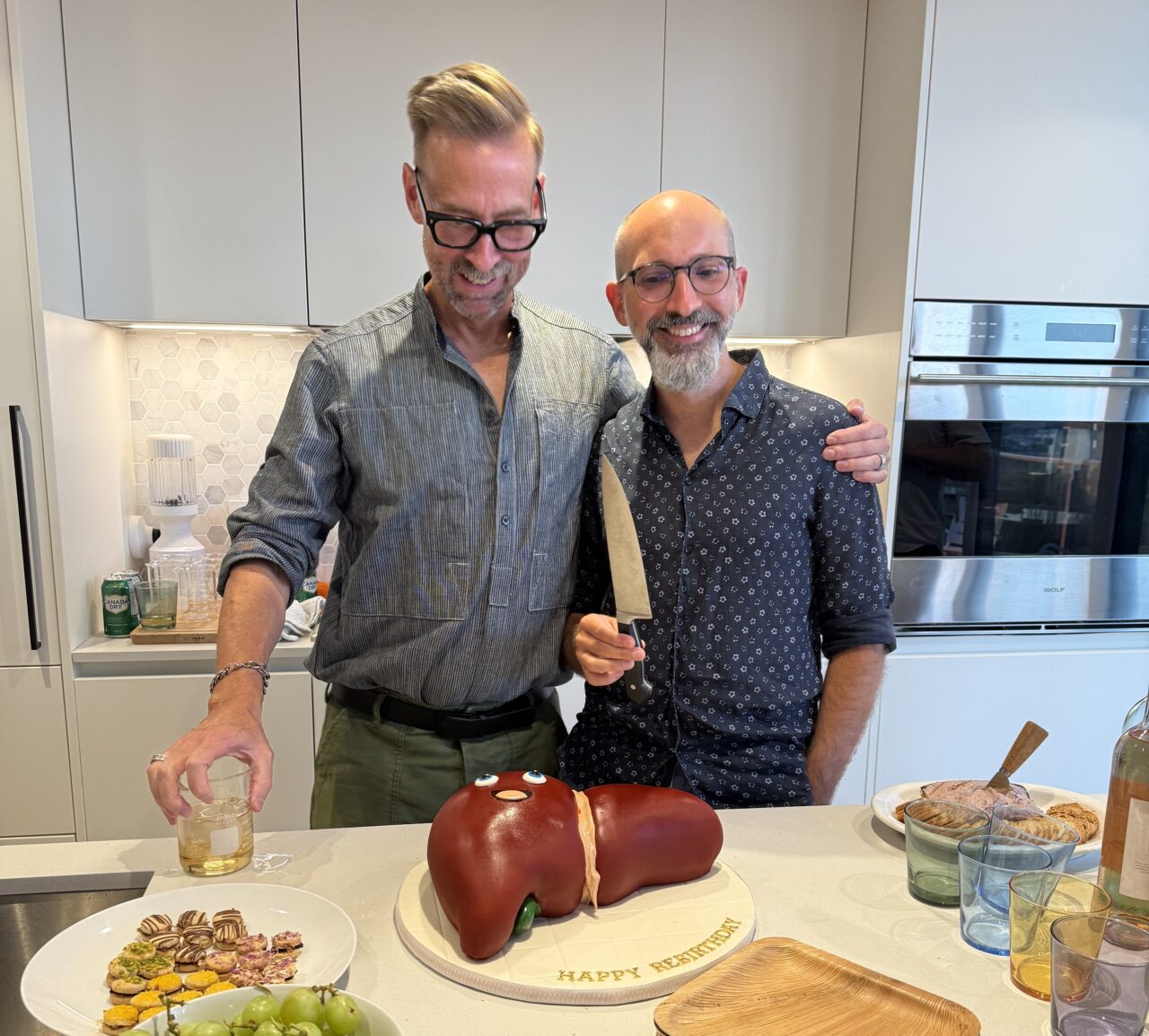
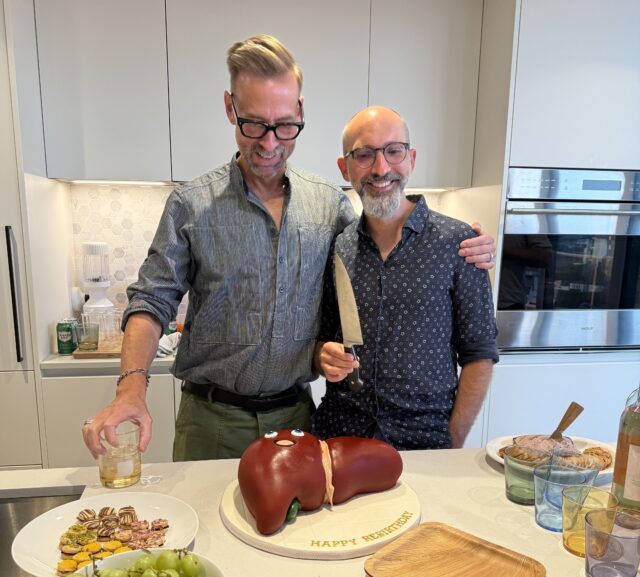
At his one-year anniversary party since receiving a life-saving liver transplant, Mark Hofeling invited his former surgeon Dr. Graziano Oldani to cut the cake. “That’s how much I trusted him,” jokes Mark. Less than two years prior, Mark had no suspicion that his liver had reached stage 3 cirrhosis—the result, primarily, of a genetic deficiency of the Alpha-1 antitrypsin protein in his liver, also exacerbated from decades of alcohol abuse.
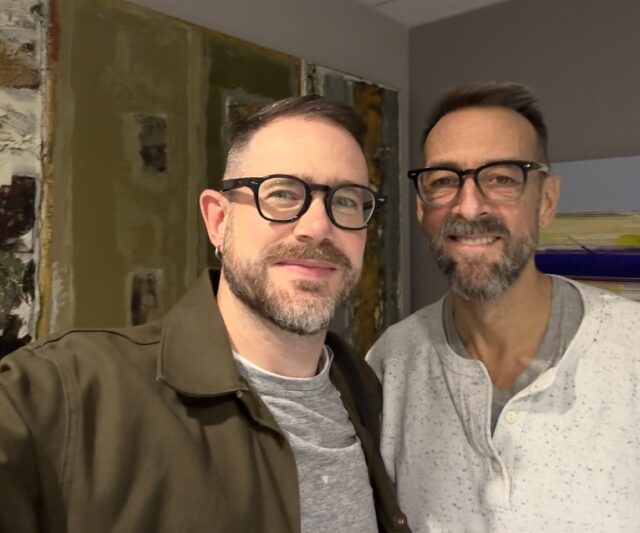
Essentially, Mark quips, “The roof was leaking, the foundation was cracked, the drinking set the house on fire.” Dr. Oldani performed Mark’s liver transplant at Vancouver General Hospital in August 2024. Surrounded by his team of medical staff, Mark vividly remembers standing in the surgical room, his feet on the cool floor. He recollects, “The fact that I could stand there without fear, on the edge of the grave, and the only people who could get me out of that pickle [were] in that room. I laid down, everybody came and said hi, touched my shoulder, affirmed that the liver was a great match. I felt good about it. So I said, ‘let’s light this candle, let’s go.’”
Nine days later, Mark walked out of the hospital into a bright sunny day and into the rest of his life. Daily he is cognizant that he came too close to death, and only thanks to his donor, and the wealth of research that goes into successful organ donation and transplant, could he walk away with a second chance. Because his donor match was strong, Mark only requires a small regimen of immunosuppressants.
Why ‘Good Enough’ Isn’t Enough
But many other transplant recipients aren’t so fortunate. Research around immunosuppressants is largely stalled, because they are generally considered to work ‘good enough.’ The problem with current immunosuppression medication is that it carries severe, often life-altering long-term side effects, and compromises the body’s natural defence mechanisms. These drugs do not specifically target the new organ but rather the immune system as a whole, which leads to a precarious balancing act between preventing rejection and managing toxicity. This can result in kidney damage, cancer, and infections. But Dr. Graziano Oldani, whose extensive research shows promise in biogenerated autologous transplant organs, believes his research will eventually offer better solutions. This revolutionary area of science aims to create personalized organs and tissues using a patient’s own cells.
Within the lab, Dr. Oldani and his team have demonstrated proof of concept in creating chimeras, which is a living creature made from a mix of different biological sources. Using white mice in the embryo stage, they inject cells from black-haired rats into the mice. Successful chimeras are those mice that are born with traits indicating they have accepted the rat’s cells, for instance, mice born with black hair. This also means their livers are composed of cells from both species and despite being a mouse liver it can be successfully transplanted back into a rat with no rejection concerns and no need for immunosuppression.
Dr. Oldani’s hope is that eventually pigs will be able to grow autologous (patient-derived) human livers that can be transplanted into recipients with 100% success, potentially eliminating the need for immunosuppression entirely.
In the lab, Dr. Oldani and his team have produced several chimeras—proof that this potential is real, and they endeavour to eventually translate the research into large animal chimeras, which brings this concept one step closer from the lab into practice.
This research is similar to but different than xenotransplantation—genetically engineered animal organs transplanted into humans. While researchers in xenotransplantation have had some limited success, there are unique barriers facing liver transplantation. Dr. Oldani views research around the liver as distinct because of “all the thousands of proteins that the liver fabricates, they wouldn’t interact the same way in a human,” he says. Thus, the potential of xenotransplantation is only good in so far as bridging—buying time, essentially—for a patient in acute liver failure. Dr. Oldani’s research helps address this issue.
Making Dreams Real: Research is the Foundation
At a recent event, Mark had the opportunity to speak with Dr. Oldani, where he expressed both his deep gratitude and a personal need to participate in advancing life-saving transplant research any way he could. He says, “I’m the guy who got hit by lightning and walked away. I know what it feels like to walk up to the edge of the grave and pop a wheelie right over it, in the most spectacular way. I feel like I have an obligation to help advance the ball in any way I can.”
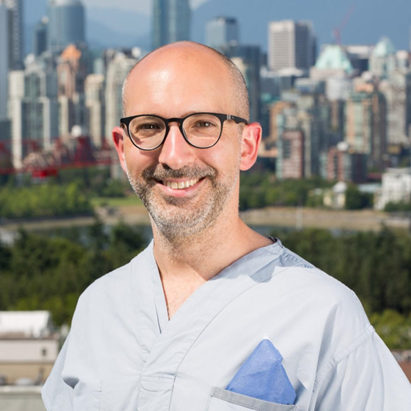
Through his friendship with Mark, Dr. Oldani gained unique insight into the experiences of recipients, both in body and mind. “Knowing him,” says Dr. Oldani, “I discovered a whole new perspective on the implications of what we do. I do not recall anybody before him being so insightful about what happened to them. His being very good at putting into words what his experience was helped me approach patients undergoing liver transplant better, and in a more compassionate way.” The profound connection Mark and Dr. Oldani share speaks to the importance of both the exchange of knowledge and connections shared between the people whose lives are saved through transplant, the medical researchers and professionals in the field, and even a donor’s family.
At ODTRF, we are privileged to have Dr. Graziano Oldani serve on our Scientific Advisory Board, where he brings valuable expertise, vision, and passion to help guide the future direction of the research we fund and the work we do.
You can support life-changing research into organ donation and transplantation by donating to the ODTRF today.