
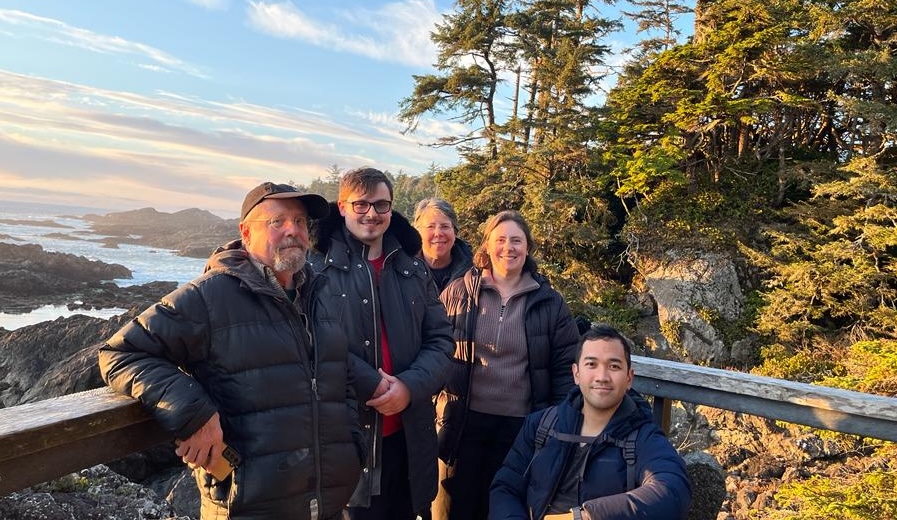
We recently caught up with living kidney donor, Aggie Black following her successful donation in 2023. In stories of living donation, the focus is often on the transplant recipient, while far less attention is given to the living donor’s recovery and experience after the lifesaving and generous act.
A former Director of Health Services, Clinical Research and Knowledge Translation at Providence Health Care, Aggie brings both professional expertise and lived experience to her reflections. Her journey extends beyond surgery and has evolved into meaningful engagement in research, using her experiences as both a patient and healthcare leader to help improve care for others.
Q: Tell us a little about your recovery and how life has been since your surgery.
A: Major surgery took a little longer to recover from than I expected, but I am happy to say that I was back at work after two months and feeling back to normal health by six months post-kidney donation. Unfortunately, I had a breast cancer diagnosis six months after donating a kidney, but my cancer was caught early and promptly treated and 18 months after that diagnosis, I again feel 100% back to my normal health and energy levels. I retired from full-time work last year, when I turned 65, but have been keeping very busy with volunteer activities, mostly on topics related to planetary health and addressing the climate crisis. I’m enjoying a more relaxed pace of life, with time for hiking, gardening, visiting with friends, and travel.
Q: What has surprised you most about the experience of being a living kidney donor?
A: I’ve been happily surprised by how much research is currently being conducted across Canada related to kidney donation and kidney health! I now get to be involved as a “person with lived experience” to support and inform a few of these research projects.
Q: In what way do you think research can play a stronger role in improving the experience and outcomes for living donors and recipients?
A: Well, I’m a huge fan of research and an absolute believer that research holds tremendous promise for improving health and the healthcare system. I’m especially intrigued by research on how to reduce the carbon footprint of kidney care and have been involved in some research and a publication on this topic. I’m also involved in a research study on updating guidelines for disaster preparedness for dialysis patients. Which is important work given climate change is increasing weather disasters that can lead to potentially dire consequences for patients who need access to life-saving dialysis supplies and medical centres for their survival.
Q: How has your journey with donation and transplantation influenced how you think about patient-centered care and health system design?
A: That is a great question! As a registered nurse, my first inclination is to think about the health care system from the clinician perspective. Being a patient through the kidney donation, and then breast cancer treatment, has given me a whole new perspective on how important patient-centred care is. People with lived experience must be involved, and their voices heard loudly and clearly, in all health care research. That’s the only way we will truly make improvements that matter to patients and families. I’m also a huge fan of practice-based research and giving direct care clinicians like nurses the opportunity to ask the research questions they feel are important, and lead research projects to improve care.
Q: Are there any gaps you see in how patients are supported before and after their donation?
A: I have felt incredibly well supported by my team at St Paul’s Hospital. I have had regular follow-up care, with plenty of time to have all my questions answered. From research projects I’ve been involved in, I know this is not always the case, especially for patients who live in rural or remote areas of other provinces. I’m part of a research project right now that is examining gaps in care for living donors, in hopes of improving guidelines to ensure no donors fall through the cracks post-donation.
Q: Although your living donation was anonymous and you do not know the recipient of your kidney, what gives this journey the greatest meaning for you?
A: I hope that I gave another person, and another family, hope for improved quality of life.
To learn more about becoming a living kidney donor, we encourage you to explore the resources available through BC Transplant.